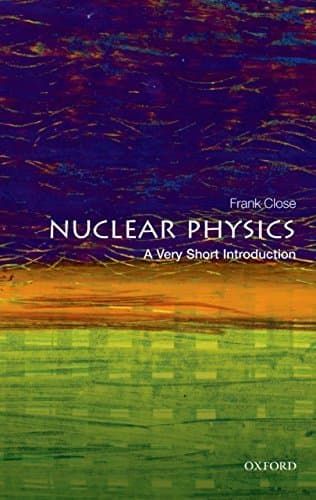
Nuclear Physics: A Very Short Introduction
by Frank Close
About this book
Nuclear physics began long before the identification of fundamental particles, with J. J. Thomson's discovery of the electron at the end of the 19th century, which implied the existence of a positive charge in the atom to make it neutral. In this Very Short Introduction Frank Close gives an account of how this area of physics has progressed, including the recognition of how heavy nuclei are built up in the cores of stars and in supernovae, the identificationof quarks and gluons, and the development of quantum chromodynamics (QCD). Exploring key concepts such as the stability of different configurations of protons and neutrons in nuclei, Frank Close shows how nuclear physics brings the physics of the stars to Earth and provides us with important applications,particularly in medicine.ABOUT THE The Very Short Introductions series from Oxford University Press contains hundreds of titles in almost every subject area. These pocket-sized books are the perfect way to get ahead in a new subject quickly. Our expert authors combine facts, analysis, perspective, new ideas, and enthusiasm to make interesting and challenging topics highly readable.
Where to buy
No purchase options available at this time.
More by Frank Close
30-Second Physics: The 50 Most Fundamental Concepts In Physics, Each Explained In Half A Minute
Philip Ball, Brian Clegg, Steve Rawlings, Frank Close, Andrew May, Leon Clifford, Rhodri Evans
30-Second Quantum Theory: The 50 most important thought-provoking quantum concepts, each explained in half a minute
Philip Ball, Brian Clegg, Alexander Hellemans, Frank Close, Sharon Ann Holgate, Andrew May, Leon Clifford, Sophie Hebden

Antimatter
Frank Close
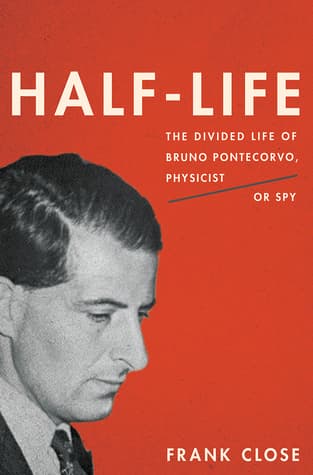
Half-Life: The Divided Life of Bruno Pontecorvo, Physicist or Spy
Frank Close