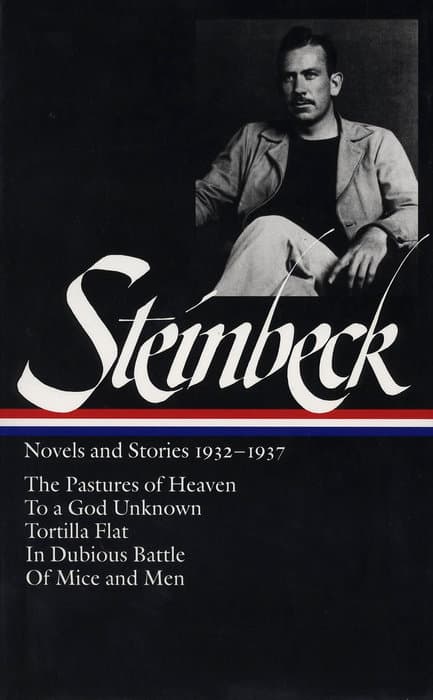
John Steinbeck: Novels and Stories 1932–1937
About this book
John Steinbeck, from the very start of his career, evoked the landscape and people of central California with lyrical intensity and unflinching frankness. The Library of America presents for the first time in one volume Steinbeck’s early writings, which expressed his abiding concerns for community, social justice, and the elemental connection between nature and human society. In prose that blends the vernacular and the incantatory, the local and the mythic, these five works chart Steinbeck’s evolution into one of the greatest and most enduring popular of American novelists.The Pastures of Heaven (1932), a collection of interrelated stories, delineates the troubled inner lives and sometimes disastrous fates of families living in a seemingly tranquil California valley. The surface realism of Steinbeck’s first mature work is enriched by hints of uncanny forces at work beneath.“Deep down it’s mine, right to the center of the world,” says Salinas Valley farmer Joseph Wayne about his land in John Steinbeck’s To a God Unknown (1933). A sense of primeval magic dominates the novel as the farmer reverts to pagan nature worship and begins a tortuous journey toward catastrophe and ultimate understanding.Steinbeck’s sympathetic depiction of the raffish paisons of Tortilla Flat (1935), a ramshackle district above Monterey, first won him popular attention. The Flat’s tenderhearted, resourceful, mildly corrupt, over-optimistic characters are a triumph of life-affirming humor.In Dubious Battle (1936) plunges into the political struggle of the 1930s and paints a vigorous fresco of a migrant fruit-pickers’ strike. Anticipating the collective portraiture of The Grapes of Wrath, Steinbeck poignantly traces the surges and shifts of group behavior.With Of Mice and Men (1937), Steinbeck secured his status as one of the most influential American writers. Lennie and George, itinerant farmhands held together in the face of deprivation only by the frailest of dreams, have long since passed into American mythology. This novel, which Steinbeck called “such a simple little thing,” is now recognized as a masterpiece of concentrated emotional power.
Where to buy
No purchase options available at this time.
More by John Steinbeck
Conversations with Jim Harrison
Jim Harrison, Robert DeMott
21 Great Stories
John Steinbeck, Ray Bradbury, James Joyce, Jack London, Guy de Maupassant, Mark Twain, Arthur Conan Doyle, Lord Dunsany, Ambrose Bierce, Wilbur Daniel Steele, James Thurber, Luigi Pirandello, Walter Van Tilburg Clark, Max Brand, C.D.B. Bryan, Abraham H. Lass
50 Great American Short Stories
Ernest Hemingway, John Steinbeck, Erskine Caldwell, Irwin Shaw, John Updike, William Saroyan, Edith Wharton, Edgar Allan Poe, William Faulkner, Jack London, Nathaniel Hawthorne, Mary Eleanor Wilkins Freeman, Mark Twain, Washington Irving, O. Henry, John Cheever, Ambrose Bierce, Henry James, Sherwood Anderson, Herman Melville, Dorothy Parker, Carson McCullers, Stephen Crane, Sarah Orne Jewett, James Thurber, Bret Harte, Ring Lardner, William Carlos Williams, James Agee, Wallace Stegner, John Collier, Stephen Vincent Benét, William Maxwell, Robert M. Coates, Ludwig Bemelmans, Fitz-James O'Brien, Oliver La Farge, Kay Boyle, Conrad Aiken, Clarence Day Jr., Joseph Mitchell, Finley Peter Dunne, Theodore Dreiser, George Ade, Milton Crane, John McNulty, Charles Macomb Flandrau, James Reid Parker, W.E.B. White, Richard P. Russell, Seymour Freedgood
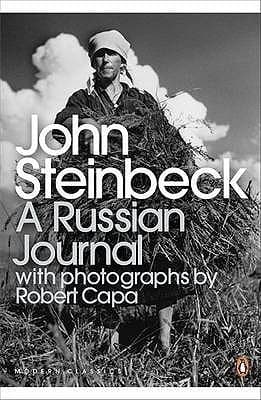
A Russian Journal
John Steinbeck, Robert Capa