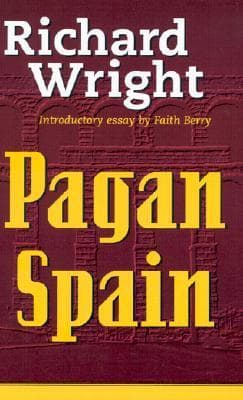
Pagan Spain
About this book
A masterful chronicler of the African American experience, Richard Wright (1908-60) was one of the most controversial & insightful writers America has produced. In '57 the publication of Pagan Spain, marked a profound change in his literary & intellectual life, reflecting a style more suitable for polemic than travel writing. Indeed, as Pagan Spain portrays midcentury Spain as a country of tragic beauty, political oppression, & contradictions, he amalgamates at once polemic, travel narrative, history & journalistic essay. He combines, as well, 1st-person narrative, eyewitness reporting, commentary, anecdotes, vignettes & dramatic monologue. At the time this book was originally published, the Spanish, despite a Catholic heritage, were shown as embracing a primitive, primeval faith. Expanding his comments on this paradox, he fashions a candid portrait of a country scarred by civil war & with an excoriating condemnation of Francisco Franco's dictatorship. In this opinionated travelog he sees himself as a humanist & reporter, a nonpartisan freedom fighter who's ceaselessly probing, tracing, analyzing & denouncing the signs of evil he associates with white patriarchy & Western imperialism. Pagan Spain, less a journalistic account of a people & an exotic locale than it's a sociological critique of a corrupt system of government, is his only nonfiction book on the subject of a European country. It reveals the striking contradictions within himself as well as within Spain. As a black man in the 50s he castigates the West for its colonialism & imperialism, while as an intellectual he embraces the secular humanism of Western Civilization. His conflicted feelings about the West are perfectly suited to his analysis of Spain, a country allied with the West but also removed from it. The book is a daring portrait of a country in turmoil. The introduction by Faith Berry puts Pagan Spain in context with the trajectory of his philosophical thought. She notes how his dissatisfaction with the Franco government was, in part, the result of his disillusionment with the Communist Party, of which he had been a member. Richard Wright wrote Native Son, Uncle Tom's Children, Black Boy, The Color Curtain etc. Faith Berry has written Langston Hughes: Before & Beyond Harlem & is the editor of A Scholar's Conscience: Selected Writings of J. Saunders Redding, 1942-77 & of From Bondage to Liberation: Writings by & about Afro-Americans from 1700 to the Present.
Where to buy
No purchase options available at this time.
More by Richard Wright
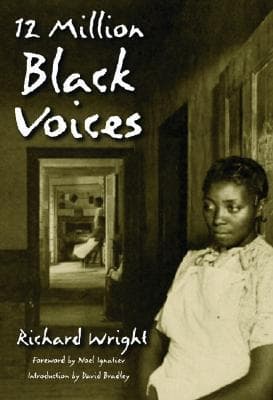
12 Million Black Voices
Richard Wright
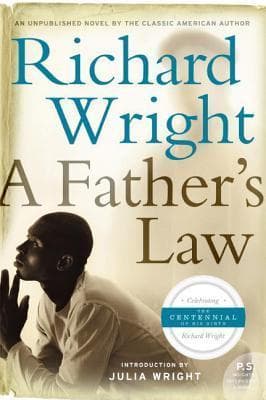
A Father's Law: A Powerful Crime Drama and Father Son Story Exploring Murder, Guilt and Innocence, and Racial Themes
Richard Wright
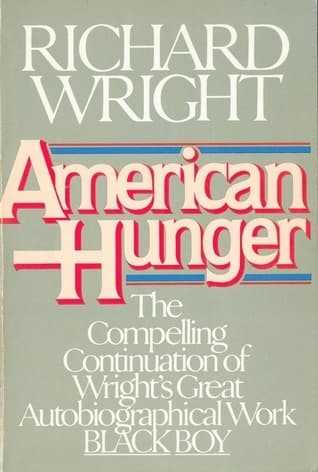
American Hunger
Richard Wright
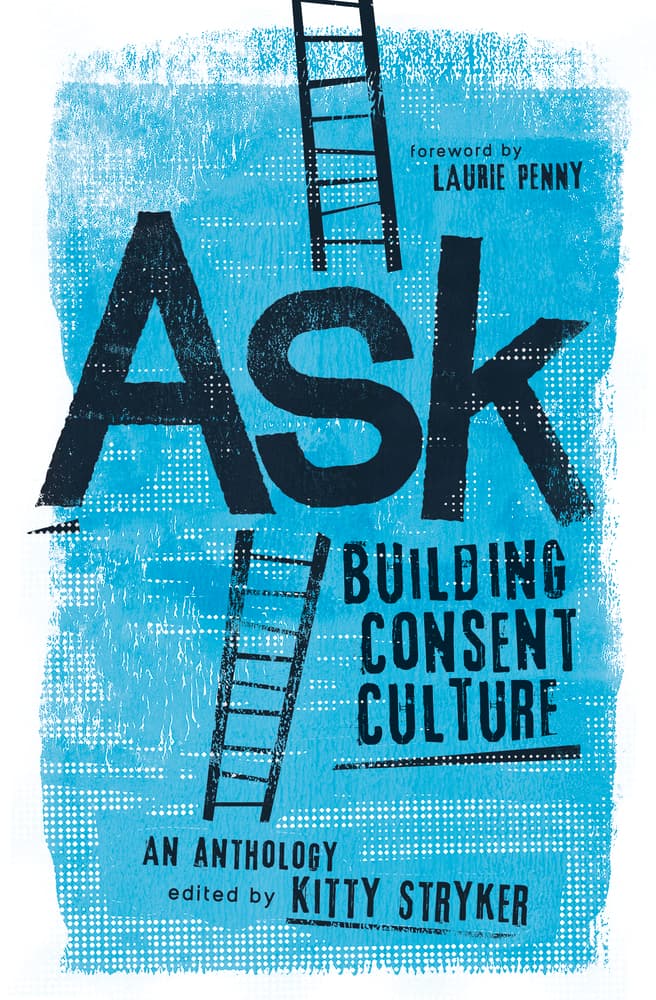
Ask: Building Consent Culture
Tobi Hill-Meyer, Laurie Penny, Richard Wright, Carol Queen, Roz Kaveney, Shawn Taylor, Cameryn Moore, Virgie Tovar, Akilah S. Richards, Kitty Stryker, Franklin Veaux, Eve Rickert, Jiz Lee, A.V. Flox, Cherry Zonkowski, Sez Thomasin, JoEllen Notte, Porscha Coleman, Alex Dymock, Navarre Overton, Laura Kate, Takeallah Rivera, Jetta Rae, Kate Fractal, Cinnamon Maxxine, Zev Ubu