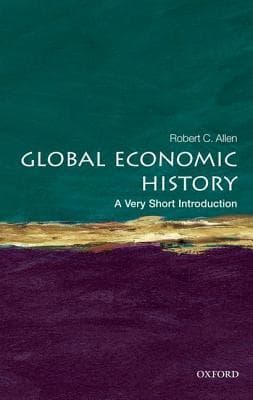
Global Economic History: A Very Short Introduction
About this book
Why are some countries rich and others poor? In 1500, global income differences were small, but disparities have grown dramatically since Columbus reached America. In this Very Short Introduction, Robert C. Allen shows how the interplay of geography, globalization, technological change, and economic policy has determined the wealth and poverty of nations. Allen shows how the industrial revolution was Britain's path-breaking response to the challenge of globalization. Western Europe and North America joined Britain to form a club of rich nations, pursuing four polices--creating a national market by abolishing internal tariffs and investing in transportation, erecting an external tariff to protect their fledgling industries from British competition, creating banks to stabilize the currency and mobilize domestic savings for investment, and promoting mass education to prepare people for industrial work. Together these countries pioneered new technologies that have made them ever richer. A few countries--Japan, Soviet Russia, South Korea, Taiwan, and perhaps China--have caught up with the West through creative responses to the technological challenge and with Big Push industrialization that has achieved rapid growth through coordinated investment.
Where to buy
No purchase options available at this time.
More by Robert C. Allen
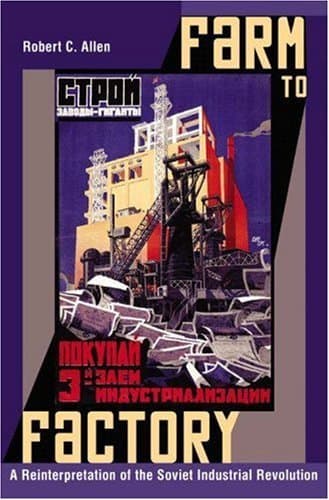
Farm to Factory: A Reinterpretation of the Soviet Industrial Revolution
Robert C. Allen
Horrible Prettiness: Burlesque and American Culture
Alan Trachtenberg, Robert C. Allen
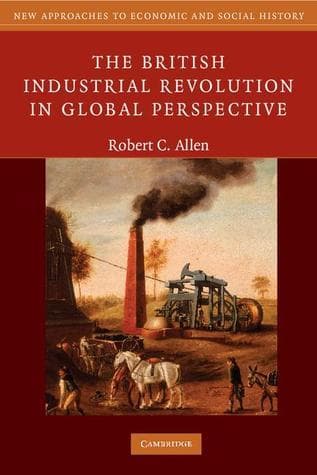
The British Industrial Revolution in Global Perspective
Robert C. Allen
The Industrial Revolution: A Very Short Introduction
Robert C. Allen