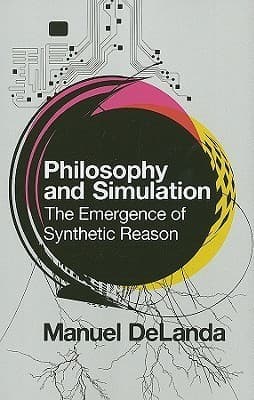
Philosophy and Simulation: The Emergence of Synthetic Reason
About this book
In this groundbreaking new book, Manuel Delanda analyzes all the different genres of simulation (from cellular automata and genetic algorithms to neural nets and multi-agent systems) as a means to conceptualize the possibility spaces associated with causal (and other) capacities. Simulations allow us to stage actual interactions among a population of agents and to observe the emergent wholes that result from those interactions. Simulations have become as important as mathematical models in theoretical science. As computer power and memory have become cheaper they have migrated to the desktop, where they now play the role that small-scale experiments used to play. A philosophical examination of the epistemology of simulations is needed to cement this new role, underlining the consequences that simulations may have for materialist philosophy itself. This remarkably clear philosophical discussion of a rapidly growing field, from a thinker at the forefront of research at the interface of science and the humanities, is a must-read for anyone interested in the philosophy of technology and the philosophy of science at all levels.
Where to buy
No purchase options available at this time.
More by Manuel DeLanda
A New Philosophy of Society: Assemblage Theory and Social Complexity
Manuel DeLanda

A Thousand Years of Nonlinear History
Manuel DeLanda

Intensive Science & Virtual Philosophy
Manuel DeLanda

The Speculative Turn: Continental Materialism and Realism
Slavoj Žižek, Bruno Latour, Alain Badiou, Alberto Toscano, Nathan Brown, Manuel DeLanda, Reza Negarestani, Peter Hallward, Steven Shaviro, Isabelle Stengers, Ray Brassier, Adrian Johnston, Iain Hamilton Grant, Levi Bryant, Gabriel Catren, John Protevi, François Laruelle, Quentin Meillassoux, Martin Hägglund