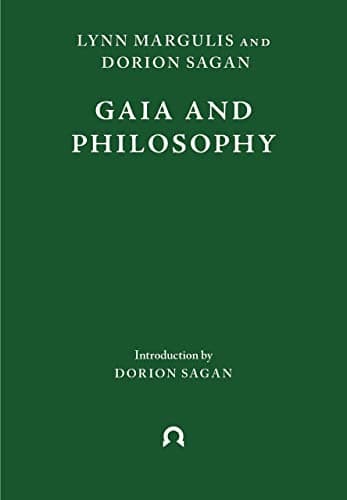
Gaia and Philosophy
About this book
In the 1970s, microbiologist Lynn Margulis and atmospheric chemist James Lovelock developed the Gaia theory. Embracing the circular logic of life and engineering systems, the Gaia theory states that Earth is a self-regulating complex system in which life interacts with and eventually becomes its own environmentGaia describes a living a body in the form of a planet. For billions of years, life has created an environment conducive to its continuation, influencing the physical attributes of Earth on a planetary scale. An idea with precedents in natural science and philosophy for millennia, Gaia resonates with the ancient magico-religious understanding that all is as above, so below.Fusing science, mathematics, philosophy, ecology and mythology, Gaia and Philosophy, with a new introduction by Dorion Sagan, challenges Western anthropocentrism to propose a symbiotic planet. In its striking philosophical conclusion, the revolutionary Gaia paradigm holds important implications not only for understanding life's past but for shaping its future.
Where to buy
No purchase options available at this time.
More by Lynn Margulis
Microcosmos: Four Billion Years of Microbial Evolution
Lynn Margulis, Dorion Sagan
Mind, Life and Universe: Conversations with Great Scientists of Our Time
Lynn Margulis
Symbiotic Planet: A New Look at Evolution
Lynn Margulis
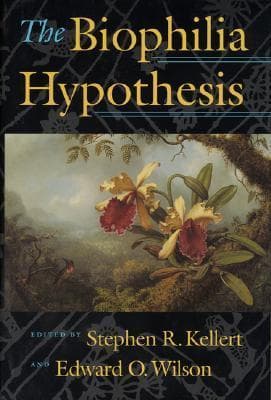
The Biophilia Hypothesis
Jared Diamond, Edward O. Wilson, Paul Shepard, Richard Nelson, Lynn Margulis, Elizabeth Lawrence, Madhav Gadgil, Sara St. Antoine, Aaron Katcher, Roger Ulrich, Scott McVay, Cecilia McCarthy, Gregory Wilkins, Gordon Orians