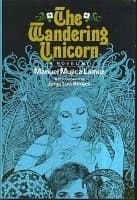
The Wandering Unicorn
About this book
The inspiration for this enthralling mediaeval romance is an ancient legend: condemned by the chicanery of her wicked mother to spend centuries languishing invisibly in her belfry, the beautiful Melusine is an immortal outcast, half woman, half serpent.Elynas, the King of Albany (an old name for Albania), went hunting one day and came across a beautiful lady in the forest. She was Pressyne, mother of Melusine. He persuaded her to marry him but she agreed, only on the promise — for there is often a hard and fatal condition attached to any pairing of fay and mortal — that he must not enter her chamber when she birthed or bathed her children. She gave birth to triplets. When he violated this taboo, Pressyne left the kingdom, together with her three daughters, and traveled to the lost Isle of Avalon.The three girls — Melusine, Melior, and Palatyne — grew up in Avalon. On their fifteenth birthday, Melusine, the eldest, asked why they had been taken to Avalon. Upon hearing of their father’s broken promise, Melusine sought revenge. She and her sisters captured Elynas and locked him, with his riches, in a mountain. Pressyne became enraged when she learned what the girls had done, and punished them for their disrespect to their father. Melusine was condemned to take the form of a serpent from the waist down every Saturday. In other stories, she takes on the form of a mermaid.Raymond of Poitou came across Melusine in a forest in France, and proposed marriage. Just as her mother had done, she laid a condition, that he must never enter her chamber on a Saturday. He broke the promise and saw her in the form of a part-woman part-serpent. She forgave him. When during a disagreement, he called her a “serpent” in front of his court, she assumed the form of a dragon, provided him with two magic rings, and flew off, never to return.
Where to buy
No purchase options available at this time.
More by Manuel Mujica Lainez
Arjantin Öyküleri
Silvina Ocampo, Julio Cortázar, Adolfo Bioy Casares, Leopoldo Lugones, Manuel Mujica Lainez, María Esther Vázquez, Federico Peltzer, Manuel Peyrou, Arturo Cancela, Pilar de Lusarreta
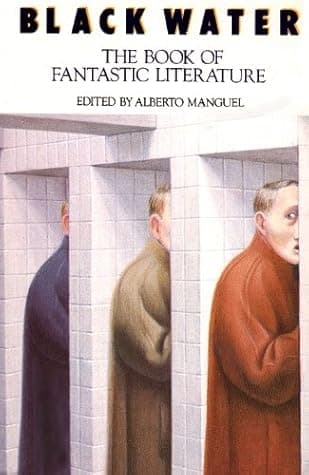
Black Water: The Book of Fantastic Literature
Hermann Hesse, Silvina Ocampo, Jorge Luis Borges, Julio Cortázar, Italo Calvino, Charles Dickens, Graham Greene, Ray Bradbury, Edith Wharton, Saki, Jules Verne, Tennessee Williams, Ryūnosuke Akutagawa, Marguerite Yourcenar, Bruno Schulz, Alberto Manguel, Cynthia Ozick, Max Beerbohm, Hilaire Belloc, Horacio Quiroga, E.M. Forster, L.P. Hartley, Marcel Aymé, M.R. James, Daphne du Maurier, Adolfo Bioy Casares, Francis King, Jean Cocteau, Marco Denevi, Jun'ichirō Tanizaki, David Garnett, Flann O'Brien, Charles Williams, Manuel Mujica Lainez, Alex Comfort, Giovanni Papini, Howard Fast, Brian Moore, João Guimarães Rosa, Léon Bloy, André Pieyre de Mandiargues, George Hitchcock, Pedro Antonio de Alarcón, Virgilio Piñera, Joanne Greenburg, I.A. Ireland, Robert Smythe Hichens, Juan Manuel