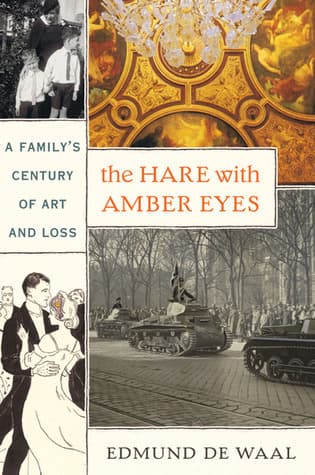
The Hare With Amber Eyes: A Family's Century of Art and Loss
About this book
The Ephrussis were a grand banking family, as rich and respected as the Rothschilds, who “burned like a comet” in nineteenth-century Paris and Vienna society. Yet by the end of World War II, almost the only thing remaining of their vast empire was a collection of 264 wood and ivory carvings, none of them larger than a matchbox.The renowned ceramicist Edmund de Waal became the fifth generation to inherit this small and exquisite collection of netsuke. Entranced by their beauty and mystery, he determined to trace the story of his family through the story of the collection.The netsuke—drunken monks, almost-ripe plums, snarling tigers—were gathered by Charles Ephrussi at the height of the Parisian rage for all things Japanese. Charles had shunned the place set aside for him in the family business to make a study of art, and of beautiful living. An early supporter of the Impressionists, he appears, oddly formal in a top hat, in Renoir’s Luncheon of the Boating Party. Marcel Proust studied Charles closely enough to use him as a model for the aesthete and lover Swann in Remembrance of Things Past.Charles gave the carvings as a wedding gift to his cousin Viktor in Vienna; his children were allowed to play with one netsuke each while they watched their mother, the Baroness Emmy, dress for ball after ball. Her older daughter grew up to disdain fashionable society. Longing to write, she struck up a correspondence with Rilke, who encouraged her in her poetry.The Anschluss changed their world beyond recognition. Ephrussi and his cosmopolitan family were imprisoned or scattered, and Hitler’s theorist on the “Jewish question” appropriated their magnificent palace on the Ringstrasse. A library of priceless books and a collection of Old Master paintings were confiscated by the Nazis. But the netsuke were smuggled away by a loyal maid, Anna, and hidden in her straw mattress. Years after the war, she would find a way to return them to the family she’d served even in their exile.In The Hare with Amber Eyes, Edmund de Waal unfolds the story of a remarkable family and a tumultuous century. Sweeping yet intimate, it is a highly original meditation on art, history, and family, as elegant and precise as the netsuke themselves.
Where to buy
No purchase options available at this time.
More by Edmund de Waal
Letters to Camondo
Edmund de Waal
The Analog Sea Review: Number Two
Yuval Noah Harari, David Foster Wallace, Hermann Hesse, Ray Bradbury, James Baldwin, Henry David Thoreau, Carl Sandburg, Andy Russell, Will Self, James Lasdun, E.M. Forster, Guy Debord, Robert Schumann, Oliver Sacks, Thomas Merton, Robert Frank, Robert Bly, Pope Francis, Leonard Cohen, Frédéric Chopin, Albert Einstein, Fenton Johnson, Giorgio Morandi, McKenzie Wark, Donald B. Kuspit, Pema Chödrön, Stephen Metcalf, Caspar David Friedrich, Jonathan Simons, Alejandro Jodorowsky, Robert Irwin, Matthew Hollis, Trebbe Johnson, Lin Yutang, Nina Simone, Kevin Fox Gotham, Red Pine, Jerry Mander, Russell Edson, Sherry Turkle, Geoff Pevere, Geert Lovink, Libero Andreotti, Edmund de Waal, Ferdinand Hodler, Lesley Saunders, Sergio Benvenuto, William Oxley, Byung-Chul Han, John Landau, Vilhelm Hammershøi, Andreas Buchleitner, Rachel Long, Peter Mettler, Mary Mercier, Alan Watts, Constant Nieuwenhuys, Antonio Merchado, Don L. Lind, Penelope Hewlett, Gudrun Sallaberger-Plakolb, C.L. O'Dell, Catherine Gareau-Blanchard
The Exiles Return
Edmund de Waal, Elisabeth de Waal
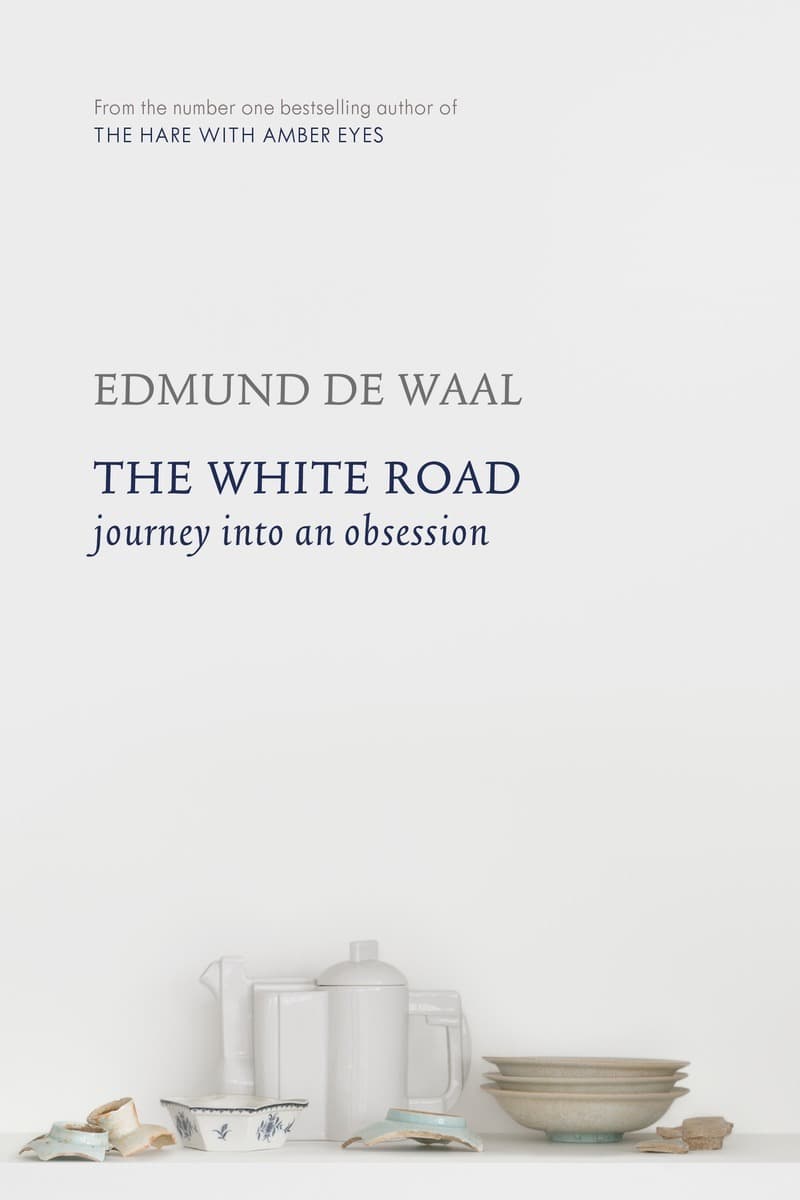
The White Road: Journey Into an Obsession
Edmund de Waal