
Iraq: The Borrowed Kettle
by Slavoj Žižek
About this book
In order to render the strange logic of dreams, Freud quoted the old joke about the borrowed kettle: (1) I never borrowed a kettle from you, (2) I returned it to you unbroken, (3) the kettle was already broken when I got it from you. Such an enumeration of inconsistent arguments, of course, confirms exactly what it attempts to deny—that I returned a broken kettle to you.That same inconsistency, Žižek argues, characterized the justification of the attack on Iraq: A link between Saddam’s regime and al-Qaeda was transformed into the threat posed by the regime to the region, which was then further transformed into the threat posed to everyone (but the US and Britain especially) by weapons of mass destruction. When no significant weapons were found, we were treated to the same bizarre logic: OK, the two labs we found don’t really prove anything, but even if there are no WMD in Iraq, there are other good reasons to topple a tyrant like Saddam ...Iraq: The Borrowed Kettle – which can be considered as a sequel to Žižek’s acclaimed post-9/11 Welcome to the Desert of the Real – analyzes the background that such inconsistent argumentation conceals and, simultaneously, cannot help but highlight: what were the actual ideological and political stakes of the attack on Iraq? In classic Žižekian style, it spares nothing and nobody, neither pathetically impotent pacifism nor hypocritical sympathy with the suffering of the Iraqi people.
Where to buy
No purchase options available at this time.
More by Slavoj Žižek
Ayat - Ayat Kiri
Jean-Paul Sartre, Slavoj Žižek, Rosa Luxemburg, Karl Marx, Vladimir Lenin, Mao Zedong, Friedrich Engels, Ernesto Che Guevara, Joseph Stalin, Soekarno

Contingency, Hegemony, Universality: Contemporary Dialogues on the Left
Slavoj Žižek, Judith Butler, Ernesto Laclau
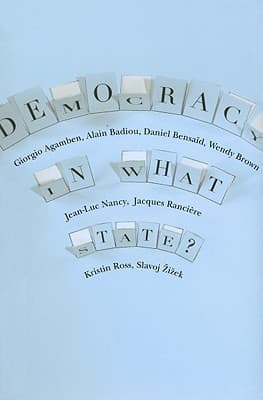
Democracy in What State?
Slavoj Žižek, Giorgio Agamben, Alain Badiou, Jacques Rancière, Wendy Brown, Kristin Ross, Jean-Luc Nancy, Daniel Bensaïd
Did Somebody Say Totalitarianism?: Five Interventions in the (Mis)use of a Notion
Slavoj Žižek